Growth Strategy
What should you agree with a fractional CMO for the first 90 days?
Hiring a fractional CMO? Use this checklist to agree responsibilities, deliverables, team support and success measures before the engagement starts.
Vladlens Kecko · · 4 min read
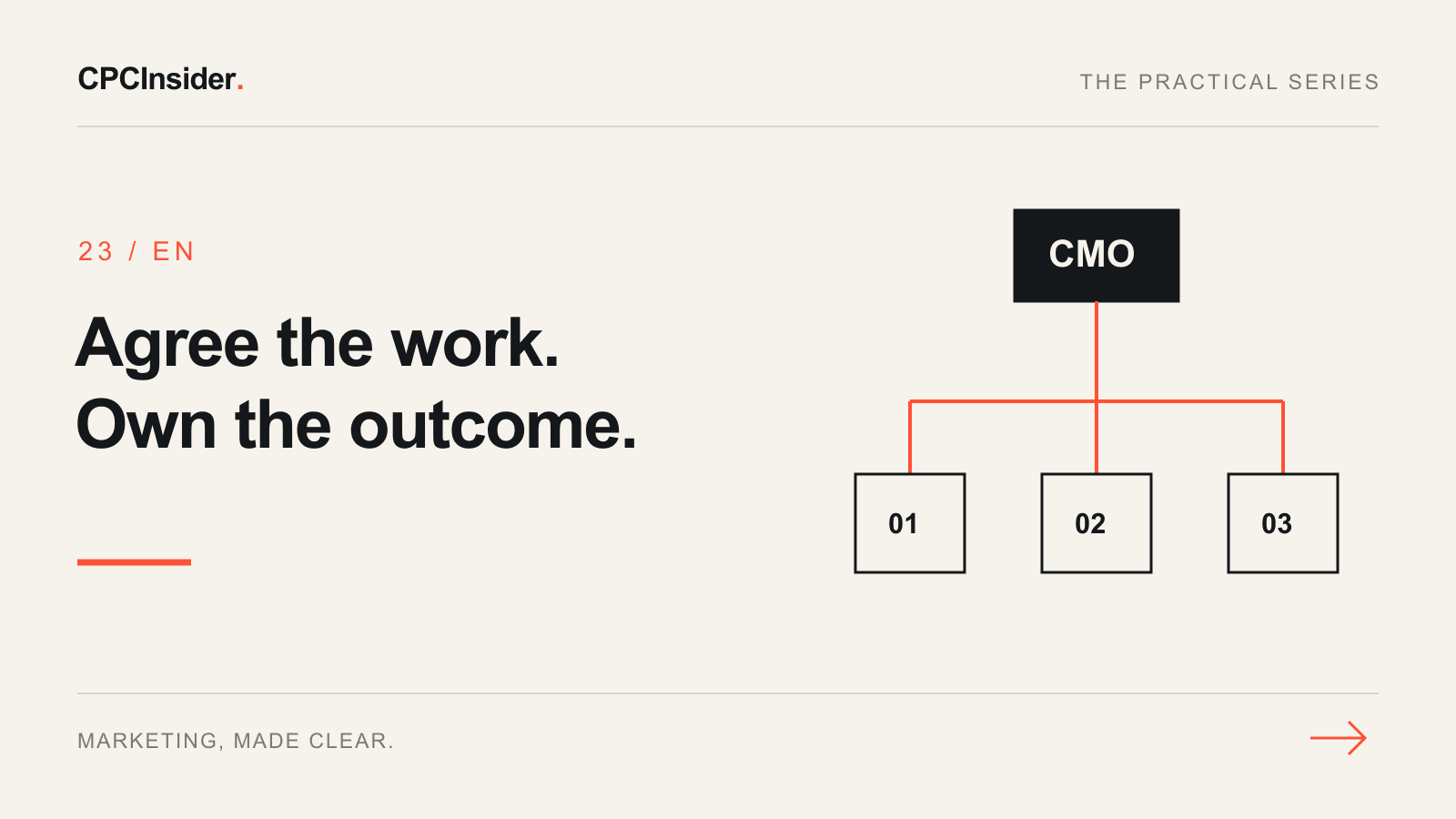
Before hiring a fractional CMO, agree what the role owns and who will execute the work. A senior marketing leader may set priorities, manage people and suppliers, and connect reporting to business goals. That does not automatically include producing every advertisement, building a website or implementing a CRM.
The useful starting point is a written scope with acceptance criteria. The first 90 days below are an example planning framework, not a standard package or a guarantee of revenue growth.
1. Decide whether leadership is the missing capability
Ask what currently blocks progress. If the business has a clear strategy but needs a specialist campaign delivered, a specialist or agency may fit better. If several people are busy but nobody owns priorities, budget and accountability, leadership may be the gap.
A small-business discussion about fractional CMOs asks about this choice. Other owners' experiences are useful questions to raise, not proof that the same arrangement suits your business.
| Need | Capability to assess |
|---|---|
| One defined technical task | Relevant specialist with a clear deliverable |
| Ongoing channel execution | Agency or internal delivery capacity |
| Priorities across people, suppliers and budget | Senior marketing leadership |
| Daily leadership and substantial internal responsibilities | Whether a full-time role is justified |
2. Agree decision rights before starting
Document who recommends, approves and implements changes. Name the business sponsor and the people responsible for media, content, website, data and sales follow-up. Clarify access, working cadence, availability and the escalation route when priorities conflict.
Include what the engagement does not cover. If a strategy requires production or development resources, agree how those resources will be provided. A plan without execution capacity cannot be evaluated like a fully staffed delivery team.
3. Define useful first-quarter deliverables
BDC's marketing-plan framework supports clear objectives, timing, budgets and responsibilities. Use those foundations to agree business-specific outputs.
| Example milestone | Deliverable | Acceptance criterion |
|---|---|---|
| Initial diagnosis | Baseline, constraints and open questions | Findings trace to data or stakeholder evidence; uncertainties are named |
| Priority agreement | Focused plan and resource allocation | Sponsor approves objective, owners, capacity and spending limits |
| Operating rhythm | Team review and metric definitions | Each recurring decision has a named owner and usable data |
| Quarter review | Lessons and next decisions | Completed work, outcomes, unresolved risks and next priorities are documented |
Set dates based on the actual scope and dependencies. Simple improvements need not wait for a milestone, and complex implementation may extend beyond the first quarter.
4. Use an engagement checklist
- Can the leader explain the business outcome the work is meant to support?
- Are strategic advice, team management and hands-on execution distinguished?
- Is every promised deliverable paired with an owner, date and approver?
- Are budget, staffing and access assumptions written down?
- Is there a clear process for changed priorities or extra work?
- Will the business retain its plans, reporting definitions and account access?
- Does the review distinguish delivered work, early indicators and mature results?
Copy this acceptance record for each deliverable: output / owner / due date / evidence / approver / dependencies / status. “Strategy presented” is weaker than an approved plan with decisions, resources and accountable owners.
5. Judge progress without accepting unrealistic promises
Within the first quarter, assess whether priorities are clearer, measurement is usable and work is being delivered against agreed decisions. Revenue may take longer to mature, especially with a long sales cycle. A guaranteed growth percentage before reviewing the business is not a sound evaluation method.
Use the 90-day planning template and weekly scorecard to make progress visible. Neither replaces judgement about quality, commercial relevance or team capacity.
Does a fractional CMO replace an agency?
Sometimes roles overlap, but leadership and execution can also work together. Choose the arrangement around the actual gap rather than the job title.
Define the leadership support your business needs
Request a free performance audit and describe your team and current priorities. Explore CPCInsider's marketing leadership service to discuss an appropriate scope before making assumptions about deliverables.
About the author
Continue reading
How to create a 90-day marketing plan with a small team
Turn a marketing goal into a 90-day plan with clear priorities, owners, budget and review dates. Use a practical template and a worked business example.
How to calculate break-even ROAS before increasing ad spend
Calculate break-even ROAS using product costs, payment fees, shipping and returns. Follow a euro example and distinguish advertising revenue from profit.
How to choose a Google Ads agency in Latvia: 12 questions
A strong partner does more than manage an advertising account. It explains decisions, protects your data and owns the path toward a business outcome.